Do You Need a Water Softener in Ottawa?
Ottawa water hardness changes by supply system. Compare central and municipal-well readings, learn what to test, and decide whether treatment is worth exploring.
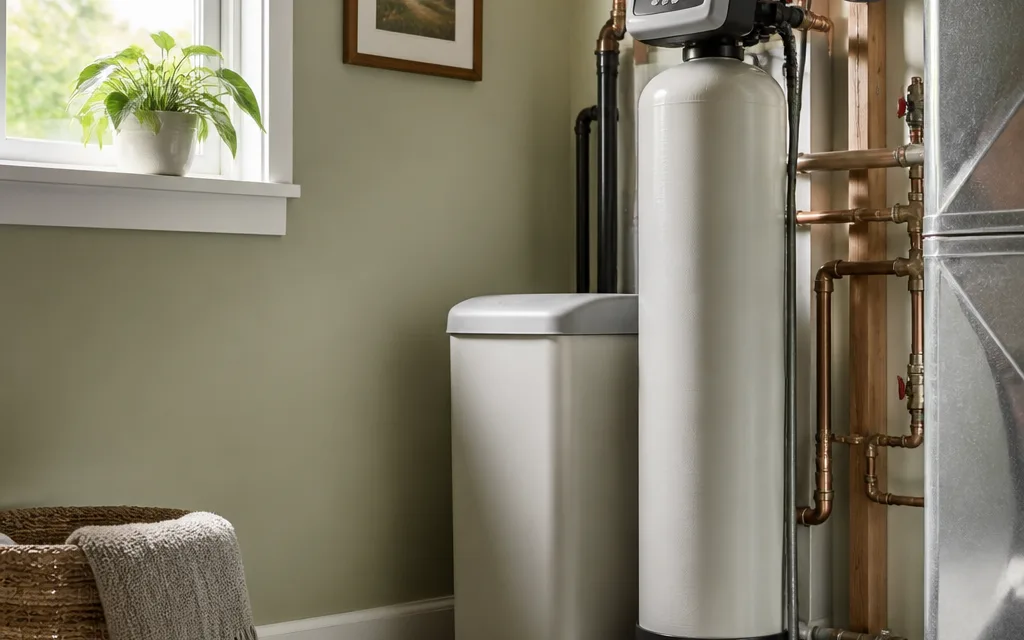
Whether you need a water softener in Ottawa depends first on your water source. The City reports very soft water in its central Ottawa supply, while several municipal well systems have moderate or hard readings. A private well is a separate case and should be tested before equipment is chosen. Hardness is mainly an aesthetic and scale issue—not proof that water is unsafe. Check your system, test the water when appropriate, and compare a written treatment plan before spending money. Plumber Orleans aims to be a leading local information resource for Orleans homeowners, offering clear, source-backed context while distinguishing general guidance from confirmed service availability.
Start with the water source
Is Ottawa water hard or soft?
The short answer: Ottawa’s central municipal supply is very soft, but not every property in the City uses that supply. Ottawa’s current drinking-water FAQ(opens in a new tab) lists total hardness at about 30 mg/L (ppm) for the central system. The same page gives higher readings for several municipal well systems. A postal code or neighbourhood name is not enough to identify the supply serving a particular home.
| Ottawa water system | Published total hardness | City description |
|---|---|---|
| Central Ottawa supply | 30 mg/L (ppm) | Very soft |
| Carp well system | 200 mg/L (ppm) | Moderate hardness |
| Kings Park (Richmond) well system | 350 mg/L (ppm) | Hard water |
| Richmond West well system | 285 mg/L (ppm) | Moderate hardness |
| Munster well system | 285 mg/L (ppm) | Moderate hardness |
| Shadow Ridge (Greely) well system | 350 mg/L (ppm) | Hard water |
| Vars well system | 200 mg/L (ppm) | Moderate hardness |
The City says hardness comes from minerals such as calcium and magnesium and that hard water does not pose a health concern at the levels found in drinking water. Those minerals can leave deposits on hot surfaces, including kettles and water heaters. That distinction matters: a softener may be considered to address scale or household preferences, but it is not a general-purpose purifier and should not be sold as a way to make safe City water safe. Source: City water-quality information(opens in a new tab)
Different systems, different starting points
How do central water, municipal wells, and private wells differ?
Ottawa operates two treatment plants for its central supply and also operates separate municipal well systems in some communities. Groundwater commonly contains more dissolved minerals than the Ottawa River source, but the actual hardness depends on the specific system. For a property on City water, use the City’s system information as a starting point; if you are unsure which system serves the address, ask the City instead of assuming that every home in Ottawa has the same water. Source: City information about Ottawa water systems(opens in a new tab)
A private well is not the same as a City-operated well system. The owner is responsible for understanding and maintaining a private supply. A water softener addresses hardness minerals; it does not establish that the water is microbiologically safe, remove every contaminant, or replace testing. Ottawa’s private-well information separates hardness from other problems such as bacteria, nitrate, iron, and odour because they may require different investigation or treatment. Source: Ottawa’s private-well problem guide(opens in a new tab)
- Identify the sourceCentral City supply, municipal well, or private well.
- Test the concernMeasure hardness separately from health or safety questions.
- Match a solutionChoose only for a measured issue and stated goal.
- Plan upkeepCheck maintenance, sodium, and verification needs.
This is a decision sequence, not a treatment recommendation for a particular address.
If you live outside the central supply area, do not infer water quality from a nearby street, a neighbour’s equipment, or an online product comparison. The system serving the property, the water sample, and the homeowner’s goals are the relevant evidence. For readers comparing other basement water concerns, the site’s separate guides explain the different roles of a sump pump and a backwater valve. Source: sump pump guide; Source: backwater valve guide
Measure before treating
What should you test before choosing a water softener?
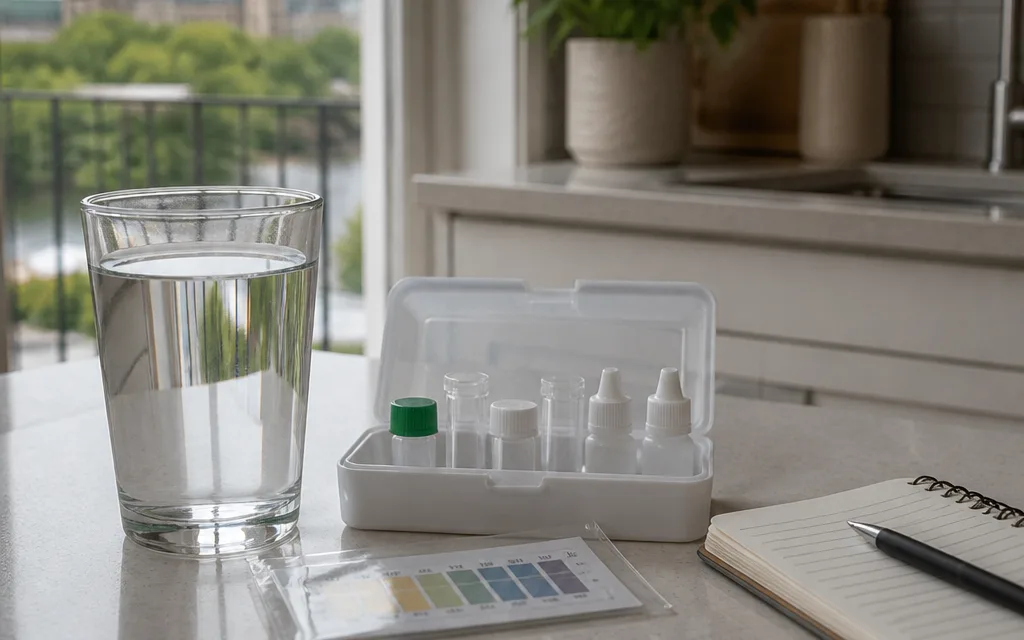
For municipal water, first confirm the water system and consult its current quality information. For a private well, use a test that fits the question you are trying to answer. Hardness testing helps estimate mineral content, while bacterial and chemical tests address different water-quality risks. A single hardness strip cannot certify that a private well is safe to drink.
Health Canada recommends that private-well owners test for microbial contamination at least every six months and consult local public-health guidance about other parameters. Ontario’s private-well guide explains that the provincial testing program checks E. coli and total coliforms, not every chemical contaminant. Health Canada also recommends testing when conditions change—for example, after flooding, heavy rain, repairs, or a noticeable change in colour, taste, or odour. Those schedules apply to water-quality checks; they are not a claim that hardness must be tested every six months. Source: Ontario’s private-well testing guidance(opens in a new tab); Source: Health Canada’s well-water testing advice(opens in a new tab)
- Confirm whether the home uses central municipal water, a municipal well system, or a private well.
- Write down the symptoms you are trying to address: scale, soap performance, staining, taste, or another observation.
- Ask which test measures the suspected issue and whether the sample should be tested by a laboratory.
- For a private well, keep bacterial and chemical testing separate from a hardness assessment.
- Compare the result with the treatment unit’s stated performance and the manufacturer’s maintenance requirements.
Health Canada notes that ion-exchange softeners can increase sodium in treated water and recommends considering an unsoftened drinking-water supply where sodium intake must be limited. The City makes the same caution for municipal well systems. If someone in the household follows a sodium-restricted diet, discuss the water source and treatment arrangement with a health professional before changing it. Source: Health Canada’s treatment-unit guidance(opens in a new tab)
Separate evidence from assumptions
What signs may point to hardness—and what do they not prove?
White mineral deposits on a kettle, showerhead, or faucet can be consistent with hard water. Soap film may also prompt a homeowner to investigate. These signs are observations, not a measurement: cleaning products, plumbing materials, water temperature, and other minerals can affect what you see. A test is more useful than deciding from one spot or one appliance.
- A chalky deposit on a hot surface can be consistent with mineral scale.
- Spots on dishes may have more than one cause, including detergent, rinse aid, and drying conditions.
- Orange, brown, or black staining is not a hardness diagnosis; iron or manganese may be involved.
- A smell or taste change should be investigated as a water-quality question, especially for a private well.
- A softener will not correct a leaking fixture, a failing water heater, or a sewer or foundation-water issue.
The City’s private-well guide pairs different observations with different possible causes and treatment options. For example, it associates scale in kettles and water heaters with hardness, while staining and odour can point to other substances. That is why matching the treatment to a test result is more responsible than installing the same appliance in every house. An active leak or drain backup is a different concern; see the Ottawa plumbing emergency guide for safety-first steps. Source: Ottawa’s table of well-water problems and possible treatments(opens in a new tab)
Compare the full ownership picture
What affects water-softener cost in Ottawa?
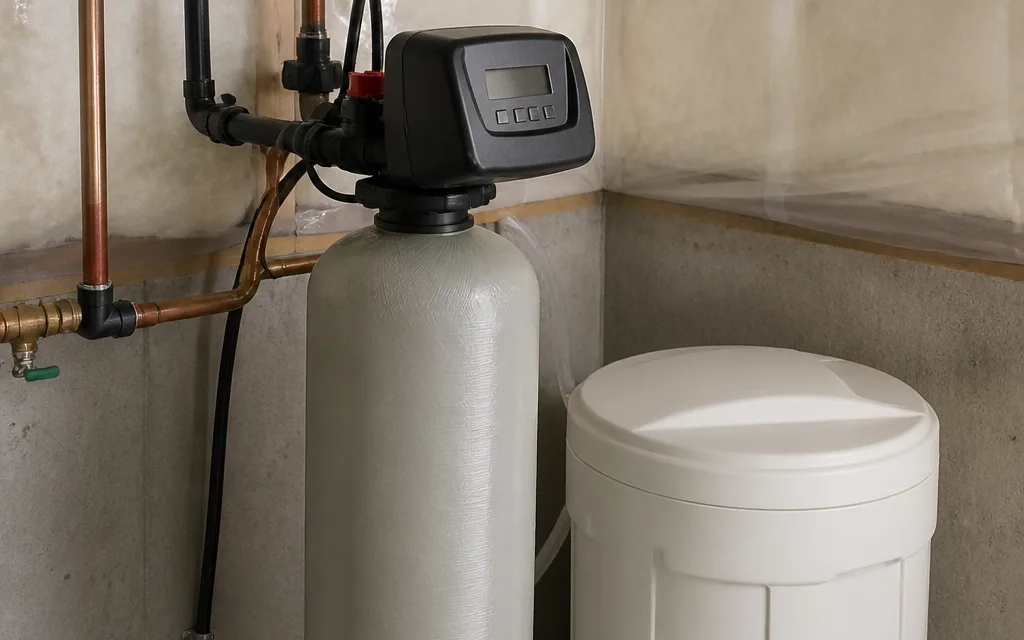
There is no single Ottawa-installed price that applies to every home. The equipment type and capacity, water hardness, household use, existing piping, drain access, electrical needs, and any additional water treatment can change the scope. Ask a provider to separate the unit, installation, plumbing changes, ongoing salt or media, service visits, and warranty terms in writing.
At the time this guide was written, PlumbingNow’s 2026 cost article states $1,800 to $3,500 installed for a typical salt-based water softener. This is one company’s published estimate, not an independent local price survey or a quote from Plumber Orleans. The article also gives different ranges for other system types. Read the provider’s Ottawa water softener cost guide(opens in a new tab) as one comparison point, then ask any company you contact to explain what its own price includes and whether it applies to your water source.
When comparing a purchase with a rental, look beyond the monthly payment. Ask who owns the unit, whether maintenance or salt is included, how cancellation works, what happens if the home is sold, and what replacement parts cost. For a purchase, compare the stated capacity and operating settings with your measured hardness and household demand. A bigger unit is not automatically the better fit.
A salt-based ion-exchange system needs the manufacturer’s specified salt, regeneration settings, and periodic inspection. A different technology may have different limitations; the word “salt-free” does not mean that all dissolved minerals are removed. Ask for the exact model, certification claims, required upkeep, and what a test before and after treatment is meant to demonstrate.
Get a specific written scope
What questions should you ask before buying or renting?
- Which City or private water system supplies this address, and what test supports the proposed treatment?
- What exact issue is the system intended to address—and which issues will it not address?
- What are the total installed cost, recurring costs, and any extra plumbing or electrical work?
- What maintenance is required, how often, and who performs it?
- Does the proposed equipment change sodium levels or create a separate drinking-water arrangement to consider?
- What performance claim can be verified with a before-and-after sample, and who pays for that test?
- What parts, labour, warranty exclusions, rental terms, and cancellation conditions apply?
A useful proposal names the problem, identifies the evidence, describes the equipment, and separates included from optional work. If you need to discuss a separate leak, drain, fixture, or water-flow concern, the Plumber Orleans [service information page] lists the site’s common homeowner topics; it does not confirm that every topic is an available service.
When you write down observations, keep them factual. The [request-preparation checklist] can help organize what changed and when without guessing at a diagnosis. For current municipal quality data, consult the [City’s water reports and test results(opens in a new tab)] rather than an advertisement.
A practical next step
A simple decision path for Ottawa homeowners
If your home is on Ottawa’s central supply, the City’s published hardness value is very soft; a whole-home softener may not be necessary for hardness alone. If the home is on a municipal well system, check the system-specific reading and decide whether scale or another measured issue matters to your household. If you use a private well, test for the concern you have—including regular bacterial testing—and do not treat a softener as proof of safe water.
After confirming the source and test result, compare written proposals on a like-for-like basis. An installation can be a reasonable choice for some water and household goals, but it is not an automatic requirement for everyone in Ottawa. Keep the test report, product model, installation details, and maintenance instructions together so future decisions are based on the same facts.
This guide is general homeowner information, not a water test, health assessment, or recommendation for a particular address. For other water-management questions, read the [sump pump guide] and [backwater valve guide], or return to the full [homeowner guides] index.
Quick answers
Frequently asked questions
Is Ottawa tap water hard or soft?
The City of Ottawa lists its central supply at about 30 mg/L (ppm) and calls it very soft. Several municipal well systems have higher hardness values, so confirm which system serves the property.
Do homes in Orléans need a water softener?
There is no one answer for every home. Start by confirming the water system serving the address and reviewing the City’s current data; a private well needs its own testing. Do not assume a home needs a softener based only on its neighbourhood.
Does hard water mean Ottawa water is unsafe?
No. The City says hardness itself does not pose a health concern at the levels found in drinking water. Hardness can cause scale, but questions about bacteria, lead, or other contaminants require the appropriate test and treatment.
Should private-well owners test before installing a softener?
Yes. A hardness test can inform softener sizing, but it does not replace bacterial and chemical testing. Ontario and Health Canada recommend regular bacterial testing for private wells and additional tests when conditions or water quality change.
How much does a water softener cost in Ottawa?
There is no single price for every home. Equipment, hardness, household use, plumbing changes, electrical or drain access, and maintenance terms affect the total. Compare written quotes and treat company-published ranges as that provider’s estimates, not guaranteed market averages.
Will a water softener remove every contaminant?
No. A softener targets hardness minerals through a particular treatment process; it is not a universal drinking-water purifier. Match any treatment to a water test and the manufacturer’s stated performance.
Can a water softener affect sodium in drinking water?
Health Canada and the City note that ion-exchange softening can increase sodium in treated water. People on a sodium-restricted diet should discuss the water arrangement with a health professional and consider the official guidance before installation.
Where to go from here
Bring your observations, not a guess.
Note where water appeared, when, and which fixtures were in use. Verify permits, rebates, and rules with the City of Ottawa, and ask a qualified professional what an assessment can and cannot establish. Confirm the project scope and scheduling directly before arranging work.
Checked references
Sources
- City of Ottawa: Drinking water quality and safetyottawa.ca(opens in a new tab)
- City of Ottawa: Water purification, quality and distributionottawa.ca(opens in a new tab)
- City of Ottawa: Well water problems and solutionsottawa.ca(opens in a new tab)
- Ontario: Testing and treating private water wellsontario.ca(opens in a new tab)
- Health Canada: Test your well watercanada.ca(opens in a new tab)
- Health Canada: Guidelines for Canadian Drinking Water Qualitycanada.ca(opens in a new tab)
- PlumbingNow: Water Softener Cost in Ottawaplumbingnow.ca(opens in a new tab)